pshe primary schools hero

PSHE in Primary Schools: A Guide for Teachers

Authored by the Muse Wellbeing Team

First Published on the 31st of July, 2026.

Lead Writer

David is a qualified British teacher and the Muse Wellbeing director and lead curriculum developer. His main passions include education, surfing (badly) and travel.

Editorial Review

With over 15 years of experience teaching in primary schools in northern England, Charlotte has played a key role in shaping many lessons across the Muse Wellbeing curriculum.
PSHE stands for personal, social, health and economic education. In primary schools, it provides planned, age-appropriate teaching about relationships, health, safety, wellbeing and life in the wider world. 

Different staff may understand PSHE through different aspects of provision, including friendships and feelings, Health Education, statutory Relationships Education, circle time, and wider curriculum planning. This can leave staff with different working definitions of the subject across the school.

In primary schools, PSHE sits at the meeting point of curriculum, safeguarding, personal development, wellbeing, and everyday school life. It helps pupils understand themselves, build positive relationships, stay safe, manage change, and make informed choices. It also provides planned, age-appropriate teaching in areas such as relationships, boundaries, health, online life, and risk.

This guide focuses on PSHE provision in primary schools in England. If you are leading PSHE across a school, reviewing compliance, choosing content, or trying to make weekly lessons more coherent, the aim is to provide a clear framework rather than another disconnected list of topics. It outlines the statutory position, the curriculum questions schools commonly face, and practical routes into more detailed planning.

The Department for Education has published revised Relationships Education, RSE and Health Education guidance for use from 1 September 2026. Schools planning for the 2026/27 academic year should refer to the updated version.

Muse Wellbeing approaches PSHE education as a practical part of the curriculum and wider school life. That matters because strong PSHE is rarely built by definitions alone. It is built through practical planning, age-appropriate sequencing, and a clear sense of what pupils need at each stage. The linked guidance allows schools to explore each area in greater detail according to their current priorities.

Contents

Empty space, drag to resize

What PSHE covers across primary school

The Department for Education’s guidance on PSHE education defines PSHE as personal, social, health and economic education.

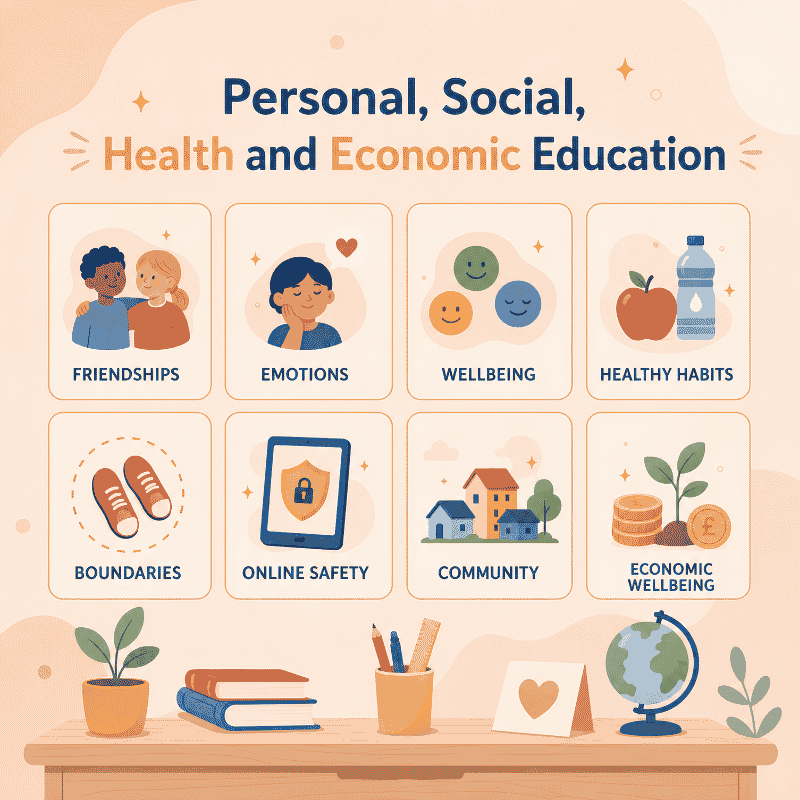
In practice, primary PSHE usually covers three broad areas, which some schools organise into termly themes: relationships, health and wellbeing and living in the wider world. This includes friendships and families, emotions and mental health, physical health, personal safety, respectful boundaries, online behaviour, money, community and preparing for change.

In many primary schools, PSHE is taught through a regular weekly lesson, with learning reinforced through assemblies, class discussions, wider curriculum activities and whole-school practice. Some schools use fortnightly lessons or occasional themed blocks, but the subject should still follow a planned and carefully sequenced curriculum rather than relying on isolated activities.

The PSHE Association describes PSHE as a broad curriculum area that extends beyond isolated lessons on feelings or wellbeing. Effective provision brings these different areas together through planned and progressive teaching.

In England, the Department for Education’s statutory guidance states that Relationships Education is compulsory in all primary schools, while Health Education is compulsory in state-funded primary schools. These statutory elements are commonly taught within a wider PSHE programme, which may also include broader non-statutory content. In independent schools, PSHE remains compulsory under the Independent School Standards, although the statutory Health Education requirements do not apply in the same way.

Because PSHE covers several related areas, schools need a shared understanding of what the subject includes and how responsibilities fit together. Curriculum leaders need to secure progression and coverage, DSLs need to understand the links with safeguarding, and teachers need clear guidance on language, discussion and sensitive questions. Parents also need straightforward information about what is taught and when.

For pupils, provision should feel coherent across lessons and wider school life. PSHE gives schools a planned way to teach important knowledge and skills relating to relationships, health, safety, online life and emotional wellbeing, with learning becoming more complex as pupils move through primary school.

A clear understanding of the foundations of PSHE requires primary schools to consider its statutory requirements, curriculum design, sequencing, lesson delivery and supporting policies. These elements work together to shape how the subject is planned and understood across the school. 

PSHE also connects closely with Relationships Education and wider work on pupil wellbeing and mental health. Schools may structure these areas in different ways, but they should form a coherent approach across curriculum planning, safeguarding, personal development and pastoral support.
Empty space, drag to resize

Where PSHE sits in school life

pshe primary schools learning
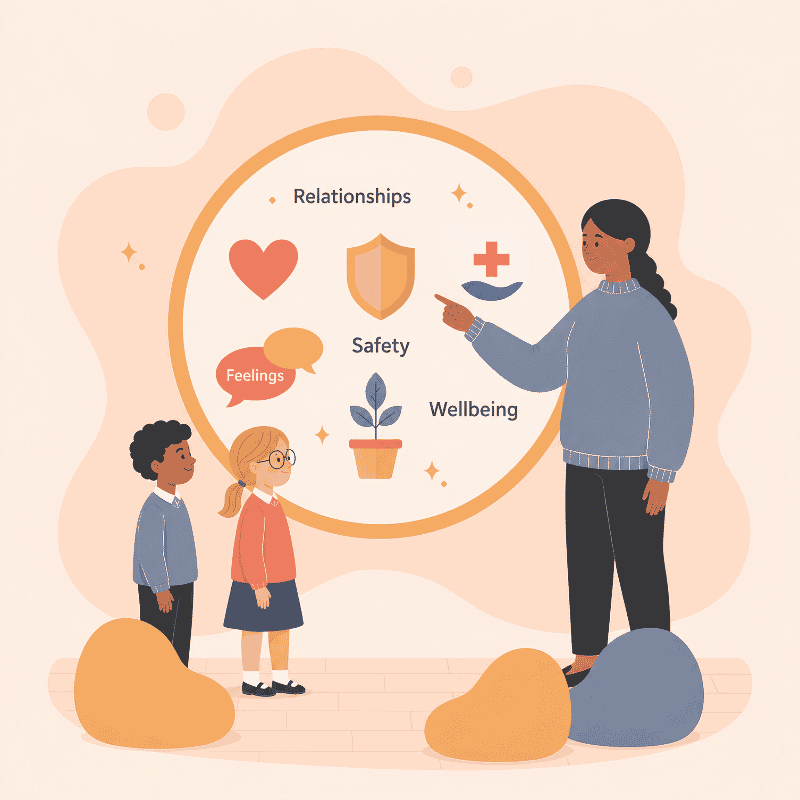
PSHE is often described as a curriculum subject, and while that is true, its role extends beyond the timetabled lesson. It shapes pastoral systems, contributes to behaviour and belonging, supports safeguarding awareness and helps children make sense of experiences that affect their readiness to learn. When provision is not carefully planned, schools may see repeated content in some year groups, gaps in others, uncertainty around statutory duties or staff handling sensitive questions without a clear framework.

PSHE is best understood through both the taught curriculum and the wider culture of the school. The taught part includes planned units, age-related outcomes, vocabulary, and assessment decisions. Wider school practice includes how adults model respect, how routines support emotional regulation, how schools talk about diversity and safety and how children learn where to seek help. The two need to line up. A polished set of lessons cannot compensate for weak day-to-day messages, and a caring culture cannot replace explicit teaching on important topics.

PSHE may contribute to several areas considered through the current education inspection framework and school inspection toolkit, including personal development and wellbeing, safeguarding and curriculum and teaching. It is not inspected as a standalone subject, but its quality and impact may be reflected across wider school provision. Leaders need to know what is required, how it relates to school policy and where responsibilities sit. Teachers need practical confidence about boundaries, language and progression. Families need clear communication, while governors often require assurance that statutory duties are being met.

PSHE often becomes easier to plan when schools break the subject into a small number of clear decisions. These usually centre on the following questions:

  • What do we mean by PSHE in our school?
  • Which parts are statutory, and which parts are broader curriculum choices?
  • How do we map content from the early years through Year 6?
  • Which topics belong where, and how do they build over time?
  • How do we make the language consistent for staff, pupils, and families?

The sections below explore these decisions in more detail, helping schools develop a clear, coherent and manageable approach to PSHE.
Empty space, drag to resize

The building blocks of PSHE in primary schools

Staff should begin by clarifying terminology and statutory requirements, as these shape staff discussions, parent communication and policy documents. Once these are clear, attention can shift to curriculum structure: how PSHE develops across phases and how broad aims are translated into teachable, age-appropriate content.

Establish shared language across the school

When staff use PSHE, RSHE, RSE and PSHCE inconsistently, misunderstandings can quickly appear in curriculum maps, parent consultation letters, governor papers and lesson planning. A new teacher may assume that one term covers the whole subject, while another may treat an acronym as outdated even though it still appears in school policy. The guide to PSHE meaning provides a clear starting point, while the explanation of PSHCE helps distinguish between overlapping terms and clarify why the differences matter.

This is more than a technical language issue. Consistent terminology helps staff explain the subject clearly to pupils, families and governors. It also supports a shared understanding of the distinction between the wider PSHE curriculum and the statutory elements within it.

Separate the broad subject from the statutory duties

PSHE is not a single statutory subject in state-funded primary schools, but important parts of it are compulsory. In simple terms, PSHE acts as the vehicle for delivering a mixture of statutory requirements and wider non-statutory learning.

Relationships Education is compulsory in all primary schools, while Health Education is compulsory in state-funded primary schools. Independent schools are required to teach PSHE under the Independent School Standards. Schools commonly teach these requirements within a broader PSHE curriculum that also includes non-statutory content.

For schools reviewing compliance, policy or leadership assurance, the guide to PSHE and the national curriculum provides the clearest next step. It explains what schools are required to teach, how PSHE relates to statutory guidance and how to describe legal duties accurately. This is particularly useful for senior leaders, subject leads and staff responding to questions from parents or governors.

Map the curriculum across phases, not as isolated lessons

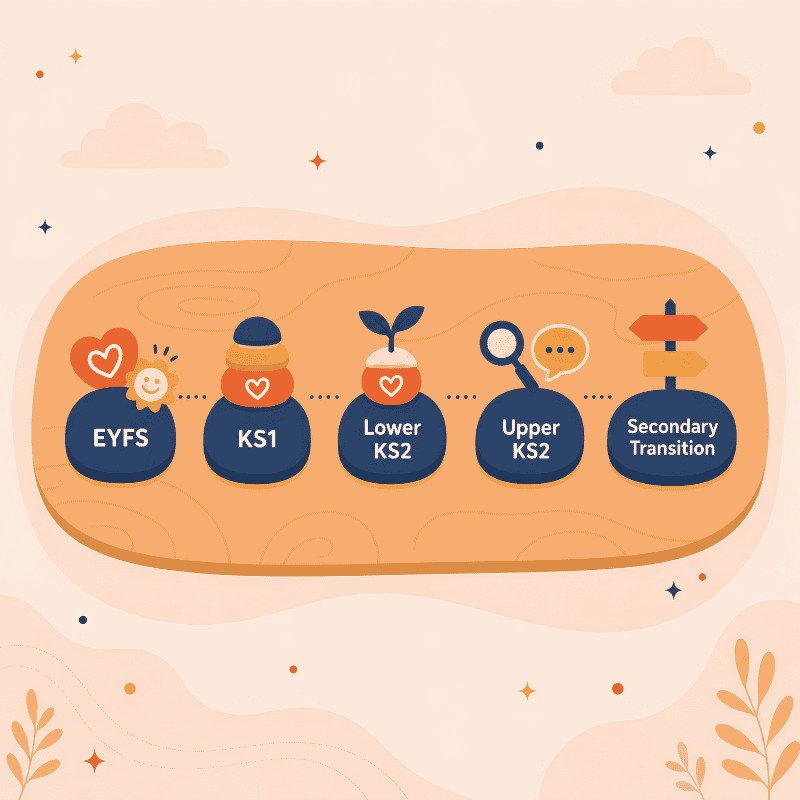
Once meaning and statutory context are clear, the next challenge is curriculum mapping and coverage. The PSHE Association’s Programme of Study supports sequenced planning across key stages 1 and 2. Younger pupils usually need concrete, familiar contexts and repeated routines. Older pupils can handle more complexity, wider social issues, and greater nuance about influence, choice, safety, and change.

This is where a clear PSHE curriculum framework becomes important. It helps schools move beyond a loose collection of assemblies or theme days and build a coherent pathway across year groups. A strong curriculum shows how key themes are revisited, how knowledge and vocabulary develop and how pupils’ understanding becomes more detailed and complex over time. It should also make clear where statutory Relationships Education and Health Education content sits within the wider programme.

This progression helps teachers understand what pupils should already know, what belongs in their year group and what learning will follow next. It also allows leaders to identify gaps, unnecessary duplication and weak transitions between phases.

Turn broad aims into a clear PSHE topic structure

Even with a curriculum outline in place, schools still need to decide what pupils will study in practical terms. Topic choice may sound straightforward, but this is where many approaches become either too vague or too crowded. If every relevant issue is added without clear sequencing, PSHE can become an overloaded list. If topics are chosen only because they feel familiar, important gaps may remain.

The PSHE topics overview helps translate the broad aims of the subject into practical content areas that schools can organise over time. These commonly include relationships, emotional wellbeing, safety, identity, health, community, money and preparation for change. The real value lies in how these areas are sequenced, revisited and adapted to pupils’ developmental stage.

Schools using Muse Wellbeing have a structured and progressive PSHE curriculum in place, while retaining flexibility to respond to pupils’ needs and their wider school context. This helps subject leads move beyond a checklist of disconnected topics and plan coherent learning across year groups. 

Together, a clear understanding of the PSHE subject, its statutory requirements, curriculum design and topic selection provides a strong foundation for effective primary PSHE education and detailed lesson planning. 
Empty space, drag to resize

Connecting the main PSHE planning decisions

pshe primary schools planning
In many schools, responsibility for PSHE is spread across several people and processes. One person may draft policy wording, another select lesson resources and someone else review statutory guidance ahead of a governor meeting. Class teachers then need to fit regular lessons around wider curriculum demands. The result can be a set of individually reasonable decisions that do not form a coherent whole-school approach.

A stronger approach is to view the main questions as connected stages within one planning process. When these are addressed in a clear order, curriculum decisions become easier to make, explain and implement consistently.

Question Why it matters What it affects next
What do we mean by PSHE? Creates consistency across staff practice, policy, and parent communication How you describe the subject and distinguish it from related terms
Which parts are statutory? Reduces compliance confusion and supports accurate planning Curriculum priorities, leadership assurance, policy wording
How will the curriculum progress? Reduces repetition and supports age-appropriate sequencing Year-group coverage, assessment, staff confidence
Which topics belong in each phase? Turns broad intent into teachable content Medium-term plans, lesson design, parental communication
How will we connect PSHE to school life? Makes learning visible beyond a weekly slot Pastoral systems, safeguarding literacy, whole-school culture

This sequence matters because each decision shapes the next. Without a shared definition of PSHE, topic planning can become inconsistent. Without clarity on statutory duties, leaders may narrow the subject too far or describe requirements inaccurately. Weak progression can also leave individually strong lessons feeling disconnected across year groups.

Schools often make quicker progress when they identify the underlying issue. A request for better resources may point to weak sequencing, uncertainty around a Year 6 lesson may reflect unclear statutory boundaries and a request for evidence of coverage may reveal gaps in whole-school mapping.

Effective subject leadership therefore begins with the foundations: terminology, statutory duties, curriculum structure, topic selection and implementation. Addressing these in order creates a more coherent and manageable approach to PSHE.
Empty space, drag to resize

Common planning errors across the whole PSHE picture

Common weaknesses in PSHE provision usually arise from unclear curriculum framing, uneven sequencing or gaps between strategic intent and classroom implementation. Identifying these issues helps leaders strengthen provision, clarify expectations and make more effective use of staff time.

Treating PSHE as a catch-all rather than a structured subject

Because PSHE covers a wide range of important areas, there is a risk that it becomes a catch-all for every issue a school wants to address. Without a clear structure, this can lead to an overloaded curriculum, uneven expectations between year groups and uncertainty about the intended learning. Strong provision begins with clear aims, then organises content into recurring strands with planned progression. 

Confusing statutory content with the whole subject

Some schools narrow PSHE to only the content they are required to teach, while others assume that the whole subject is statutory in the same way. Both approaches can create difficulties. The first may exclude valuable wider learning around economic wellbeing, identity and citizenship. The second can lead to inaccurate wording in policies and communication with parents. Schools should clearly distinguish between statutory requirements and the wider PSHE curriculum so that curriculum maps, policies and parent information remain accurate and consistent.

Revisiting topics without deepening learning

Repeating topics such as friendship, feelings or keeping safe each year is not the same as building progression. The context, vocabulary, complexity and level of independence should develop over time. A Year 1 lesson on naming feelings serves a different purpose from a Year 5 lesson on influence, mixed emotions and social pressure, even when both sit within an emotional wellbeing strand.

Matching content to pupils’ developmental stage

Effective progression depends on matching content to pupils’ age and development. In early primary, children usually benefit from concrete examples, familiar scenarios and repeated routines. In upper primary, teaching can explore greater complexity around risk, privacy, change, influence and conflicting information. Coherence can be lost when younger pupils encounter abstract ideas too quickly or when older pupils continue to revisit content at an overly basic level.

Relying too heavily on reactive pastoral support

Strong pastoral care supports PSHE, but it cannot guarantee consistent curriculum coverage. A pupil may receive effective support after a friendship problem, online incident or wellbeing concern, but this does not ensure that all pupils have been taught how to recognise risks, manage disagreements, make informed choices or seek help. Planned PSHE teaching gives every pupil access to the same age-appropriate knowledge and allows important concepts to build progressively, rather than depending on incidents, assemblies or individual teacher confidence.

Leaving parent communication too late

Parent communication is most effective when it begins before concerns or misunderstandings develop. Schools should explain the aims of PSHE, the content pupils will learn, the language teachers will use and which elements are statutory. The Department for Education’s statutory guidance states that schools must consult parents when developing or reviewing their Relationships Education or RSE policy. Schools should also ensure that parents know what will be taught and when, with opportunities to understand the curriculum and ask questions. Sharing information early helps parents see how learning remains age-appropriate across the primary years.

Muse Wellbeing supports consistent communication by giving schools a shared curriculum structure, fully resourced lessons, teacher guidance and supporting documents for subject leads. Leaders can clearly show parents which themes are taught in each year group, teachers can use consistent language across lessons and policies can reflect the curriculum pupils actually receive. This makes it easier for schools to explain what is being taught, when it is taught and how learning develops over time.
Empty space, drag to resize

A practical starting route for schools and teachers
pshe primary schools progression
When PSHE feels broad or difficult to navigate, it can help to work through a clear sequence. Schools will begin from different starting points, so the steps below are designed to identify the most useful place to begin.

  • If your school language is inconsistent, agree clear definitions for PSHE, RSHE, RSE and related terms before reviewing curriculum plans or policy wording.
  • If leadership is exploring what must be taught, clarify the statutory position and ensure this is reflected accurately in policies, curriculum documentation and parent communication.
  • If year-group provision feels repetitive or uneven, the Oak National Academy primary RSHE and PSHE curriculum overview provides a useful reference point for curriculum structure and progression across phases.
  • If teachers need structured units and ready-to-use lesson content, explore the Muse Wellbeing PSHE curriculum.
  • If your challenge is wider school alignment, review how PSHE connects with safeguarding, wellbeing, parent communication, and personal development.

Classroom teachers and subject leaders may need different starting points when reviewing PSHE in primary schools. Teachers should first check what pupils have already learned, review the next lesson or unit and identify any key vocabulary, safeguarding considerations or sensitive questions that may require preparation. PSHE leads and senior leaders should begin with the wider curriculum map, checking statutory coverage, progression between year groups and any gaps or unnecessary repetition.

In a small primary school, this process can remain straightforward. Start by identifying the statutory requirements within the PSHE subject, map each area to the year groups in which it is taught and check how pupils’ knowledge and understanding develop over time. Schools should then agree consistent language, clarify who is responsible for teaching and reviewing each area and ensure that staff and parents can access clear information about the curriculum. This creates a workable structure for primary PSHE without requiring every policy, resource or unit to be rewritten at once.
Empty space, drag to resize

Where to go next

Once the wider PSHE picture is clear, the most useful next step depends on the question the school is trying to answer. For a clear starting definition, read the guide on PSHE meaning. For legal and statutory clarity from 2026 onwards, the guide to PSHE and the national curriculum provides the most direct route.

To explore the Muse Wellbeing scheme of work in more detail, go to our PSHE curriculum page. For support in deciding what to include within units and themes, use the overview of PSHE topics.

Schools may also need to connect PSHE with other areas rather than treat it in isolation. Where the priority is understanding how PSHE relates to duty of care, recording concerns and protective school systems, continue to the guidance on safeguarding in schools
Empty space, drag to resize

Frequently Asked Questions

What is PSHE in school?

PSHE is the subject through which pupils develop knowledge and skills relating to personal wellbeing, relationships, health, safety and life in the wider world. In primary schools, it often includes friendships, feelings, family relationships, healthy habits, boundaries, online behaviour, money and decision-making. Schools may organise it differently, but its main purpose is to prepare children for everyday life through structured, age-appropriate teaching rather than leaving important learning to chance.

What does PSHE stand for?

The Department for Education’s guidance on PSHE education defines PSHE as personal, social, health and economic education. The title reflects the broad scope of the subject, including learning about self-awareness, relationships, physical and mental wellbeing, safety and economic wellbeing. In primary schools, this learning is usually taught through planned lessons and reinforced through wider school routines and expectations.

Is PSHE the same as RSHE?

No. The terms are related but not identical. RSHE is commonly used as a collective term for Relationships Education, Relationships and Sex Education and Health Education. PSHE is the broader subject and may include this content alongside areas such as citizenship, money, emotional literacy and personal development. In primary schools, the statutory elements sit mainly within Relationships Education and Health Education, which schools often teach through their wider PSHE curriculum.

Is PSHE compulsory in primary schools?

In state-funded schools, PSHE as a whole is not compulsory in the same way as a national curriculum subject. Independent schools must provide PSHE under the Independent School Standards. In England, Relationships Education is compulsory in all primary schools, while Health Education is compulsory in state-funded primary schools. These statutory elements are often delivered through PSHE lessons. Schools therefore need to distinguish clearly between the wider subject and the statutory content within it.

Is PSHE part of the national curriculum?

PSHE as a whole is not a national curriculum subject in the same way as English or mathematics. However, Relationships Education is compulsory in all primary schools, while Health Education is compulsory in state-funded primary schools. In practice, many schools include this required teaching within their PSHE curriculum. The phrase “PSHE national curriculum” is commonly used, but schools should describe the legal position accurately in policy and communication.

What topics are usually taught in PSHE?

Common PSHE topics include friendships, family relationships, emotions, mental wellbeing, healthy lifestyles, hygiene, keeping safe, online behaviour, privacy, growing and changing, communities, money awareness, fairness and decision-making. The exact content depends on school context and curriculum design. A strong PSHE programme does more than list topics. It sequences them so pupils revisit key ideas with increasing depth as they move through primary school.

How often should primary schools teach PSHE?

There is no nationally prescribed amount of curriculum time for PSHE. Many primary schools teach it weekly, while others combine regular lessons with assemblies, themed work or cross-curricular links. The important issue is not only frequency but consistency. Pupils need planned, progressive teaching rather than occasional coverage that depends on spare time or current concerns. Schools should be able to show where statutory content is taught and how wider PSHE learning develops over time.

How is PSHE different in KS1 and KS2?

In KS1, PSHE usually focuses on immediate experiences such as feelings, friendships, routines, basic safety and simple healthy choices. In KS2, pupils can explore broader contexts and more complex ideas, including influence, responsibility, changing bodies, online risk, transition and more complex relationship situations. The development should feel gradual rather than abrupt. Effective progression means older pupils do not simply repeat the same topics through slightly more detailed activities.

Does PSHE include online safety?

Yes. Online life often forms part of PSHE, although schools may also teach aspects of it through computing, safeguarding or wider pastoral provision. PSHE can address the relational and decision-making aspects of online safety, including peer pressure, privacy, respect, harmful content, help-seeking and the effect of online behaviour on wellbeing. This overlap is normal. The key is ensuring that teaching is coordinated rather than duplicated or left unclear.

Who usually leads PSHE in a primary school?

Leadership varies according to school size and structure. A PSHE lead, RSHE lead, assistant head, DSL, wellbeing lead or curriculum coordinator may take responsibility. In smaller schools, one person may hold several of these roles. This can work well where responsibilities are clearly defined. Effective leadership combines curriculum planning with an understanding of pastoral, safeguarding and communication considerations.

How should schools explain PSHE to parents?

Clear, calm communication usually works best. Schools should explain what PSHE includes, which elements are statutory, how content is age-appropriate and why it supports pupils’ safety and development. Schools must consult parents when developing or reviewing their Relationships Education or RSE policy and make the policy available.

From 1 September 2026, the revised guidance strengthens expectations around proactive engagement, transparency and access to curriculum materials. Schools should ensure that parents know what will be taught and when, and provide examples of planned resources during consultation. Parents should also be informed about any primary sex education content and their right to request withdrawal from that element, but not from Relationships Education or Health Education.

What makes a PSHE curriculum strong?

A strong PSHE curriculum has a clear purpose, covers statutory requirements, remains age-appropriate and shows progression across year groups. It uses consistent language, covers important content without overload and helps staff understand how learning deepens over time. It also connects with wider school practice so pupils receive consistent messages through lessons, routines and support systems. Effective PSHE is planned and coherent rather than improvised.

Can schools adapt PSHE to their local context?

Yes. Schools often need to reflect their pupils, community, safeguarding context and pastoral priorities. Adaptation is usually appropriate as long as statutory content remains secure and the curriculum continues to show clear progression. Local tailoring may affect examples, sequencing, vocabulary support, family communication or the emphasis given to particular issues. The aim is to respond to context without allowing it to replace careful curriculum planning.

What should a school review first if PSHE feels weak?

Begin by identifying whether the main weakness relates to language, statutory clarity, progression, topic coverage or implementation. Schools sometimes replace resources before identifying the underlying issue. Provision may appear weak because year groups repeat content, staff are unclear about statutory requirements or wider strands have not been defined carefully. Reviewing the structure first usually saves time and supports better teaching decisions.
Empty space, drag to resize

Key takeaways

  • PSHE is a broad subject covering personal, social, health and economic education across primary school.
  • The subject extends beyond weekly wellbeing activities and works best as a planned, progressive curriculum.
  • In England, all primary schools must teach Relationships Education, while state-funded primary schools must also teach Health Education, often through PSHE.
  • Shared language matters because confusion between PSHE, RSHE, RSE and PSHCE can affect planning and communication.
  • Strong PSHE depends on careful sequencing rather than simply repeating familiar topics each year.
  • Topic selection should reflect pupils’ developmental stage and the wider school context.
  • Planned PSHE lessons should work alongside pastoral support, assemblies and wider school practice.
Empty space, drag to resize

Conclusion

Strong PSHE in primary schools depends on a few connected decisions: agreeing what the subject includes, identifying statutory content, mapping progression across year groups and turning broad aims into lessons teachers can deliver. When these elements align, leaders can check coverage, teachers can plan with confidence and pupils receive coherent learning that develops over time.

Where the main challenge is progression across year groups, the PSHE curriculum guidance provides a useful next step. It can help schools identify gaps, reduce unnecessary repetition and develop a clearer pathway across the primary years.

Schools with an established framework may then use the PSHE topics overview to refine content and ensure that broad aims are translated into age-appropriate teaching. Progress is usually strongest when schools identify the next decision that will improve the wider picture rather than trying to address every issue at once.

Muse Wellbeing supports schools with a structured, progressive PSHE curriculum, fully resourced lessons and guidance for teachers and subject leads. Schools can use the curriculum map to check year-group coverage, see how learning develops and give staff and parents clear information about what is taught.
Created with